
The Rise of Senior Co-Housing: Why California Boomers Are Ditching Retirement Homes for Intentional Communities in 2026
The Retirement Rulebook Has Been Rewritten
Picture this: It's 2026, and a 68-year-old former graphic designer named Linda is eating dinner at a shared table with five neighbors — a retired teacher, a semi-retired musician, a travel writer, and a couple who met while volunteering in Costa Rica. Linda doesn't live in a nursing home. She's not in an assisted living facility. She owns her bedroom and shares the rest of a beautifully renovated Victorian in Pasadena with people who actually want to be there together.
This isn't a utopian fantasy. This is senior co-housing in California in 2026 — and it's growing faster than any other segment of the housing market.
The so-called Silver Tsunami — the wave of Baby Boomers hitting their 60s and 70s — has arrived. But instead of flooding nursing homes and retirement villages, millions of active older adults are choosing something radically different: intentional co-living communities built around shared values, social connection, and financial sustainability. And California, with its housing crisis, its progressive culture, and its massive Boomer population, is ground zero for this revolution.
The Dual Crisis Driving the Shift: Loneliness + Unaffordability
To understand why senior co-housing is exploding, you need to understand the two forces pushing older Californians toward it: a loneliness epidemic and a housing affordability catastrophe.
The Loneliness Crisis Among Seniors
The U.S. Surgeon General declared loneliness a public health epidemic, and seniors are among the hardest hit. Studies show that chronic loneliness among adults over 65 carries health risks equivalent to smoking 15 cigarettes per day. Social isolation accelerates cognitive decline, increases risk of heart disease, and dramatically shortens life expectancy.
Traditional retirement housing models weren't designed to fix this — they were designed around care, not community. A standard retirement home offers proximity to other people, but not necessarily genuine connection. A co-housing community offers something fundamentally different: intentional relationships built on shared interests, mutual support, and daily interaction by choice, not by default.
The Affordability Catastrophe in California
California remains one of the most expensive states in the nation to age in. The median cost of assisted living in California now exceeds $6,000 per month, and skilled nursing facilities can run $12,000 or more. Meanwhile, the majority of Boomers are entering their late 60s with retirement savings well below what financial planners recommend.
Even for homeowners who've accumulated equity, "aging in place" in a large family home often means paying property taxes, maintenance costs, and utilities for space they no longer need — while living alone. Co-housing offers a smarter financial model: shared costs, shared maintenance, and shared resources that can reduce monthly housing expenses by 30–50% compared to solo homeownership or traditional senior facilities.
For cost-sensitive seniors exploring their options, CoHomez's transparent pricing model breaks down exactly how much you can save by transitioning to an intentional co-living arrangement — making the math clear before you make the move.
From Care-Based to Lifestyle-Based: The Philosophy Shift That Changes Everything
Here's the key distinction that separates modern senior co-housing from everything that came before it: the shift from a care-based model to a lifestyle-based model.
Traditional senior housing is organized around the assumption that older adults primarily need services — medical supervision, meal delivery, assistance with daily activities. These are valid needs, but organizing an entire living environment around them sends a powerful (and often damaging) message: that aging is fundamentally about decline.
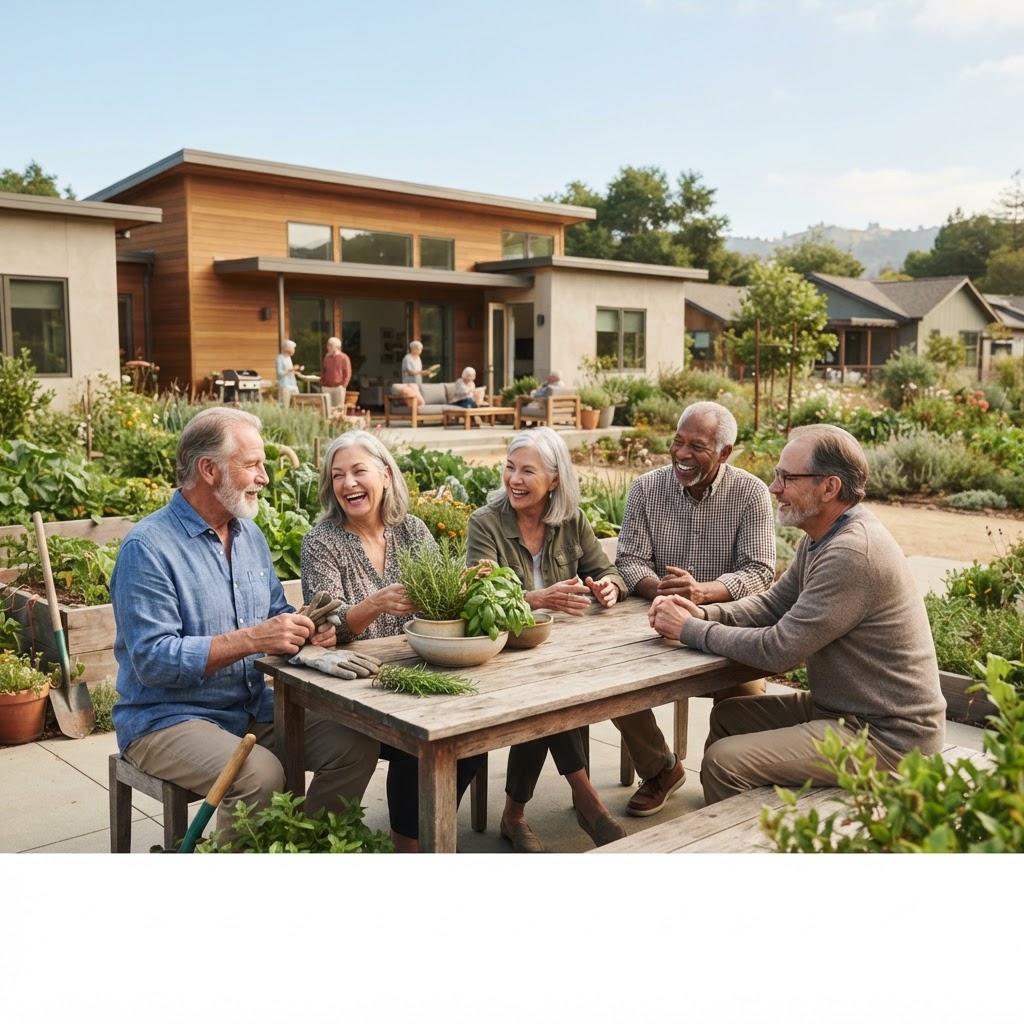
Intentional co-living communities for active adults operate on an entirely different premise. They're organized around what seniors want — creative expression, intellectual engagement, physical activity, meaningful work, travel, friendship, and purpose. The community design serves the lifestyle, not the other way around.
This is exactly what the data confirms. According to a 2026 survey of 55+ homebuyers, 62% of active adult buyers are now prioritizing intentional relocation and community amenities over proximity to medical care when choosing where to live. They're asking: "Where will I thrive?" — not "Where will I be looked after?"
What "Intentional" Actually Means in Practice
When housing professionals use the word "intentional," it can sound vague. But in practice, intentional co-housing communities have specific, tangible characteristics that distinguish them from generic apartment complexes or retirement villages:
- Shared Values Alignment: Residents choose each other based on compatible values — sustainability, creativity, activism, spirituality, or simply a love of cooking and good conversation. There's a matching process, not just a lease application.
- Common Spaces Designed for Use: These aren't lobbies or amenity rooms that sit empty. They're kitchens where people actually cook together, gardens people actually tend, workshops people actually use, and common areas where spontaneous connection happens every day.
- Participatory Governance: Residents have a genuine say in how the community operates. Decisions about shared meals, community events, maintenance priorities, and new residents are made collectively.
- Mutual Support Without Dependency: Unlike institutional care, mutual support in co-housing is organic and reciprocal. A neighbor drives you to a doctor's appointment today; you help them edit their memoir next week. It's a network of equals, not a hierarchy of caregivers and patients.
Platforms like CoHomez have been purpose-built to help Californians find exactly this kind of living arrangement — matching active adults with communities that reflect their values, lifestyle preferences, and budget requirements, all in one place.
Why California Is the Epicenter of the Senior Co-Housing Movement
Senior co-housing communities exist across the United States, but California has emerged as the undisputed leader of the movement — and for good reason.
Demographics: The Silver Tsunami Has Arrived
California is home to more than 6 million residents aged 65 and older — a number projected to reach 8 million by 2030. This demographic wave is creating enormous demand for housing alternatives that the traditional market simply cannot supply at scale. The sheer size of California's aging population means that even niche housing models like co-housing gain critical mass faster here than anywhere else.
Culture: Progressive Values Meet Practical Need
California has a long history of counter-cultural housing experimentation — from the communal living movements of the 1960s to the cohousing pioneers of the 1990s. That cultural openness makes Californians, including older Californians, more willing to consider non-traditional living arrangements. When you combine genuine cultural openness with genuine financial pressure, you get rapid adoption.
Climate and Lifestyle: Active Aging Thrives Here
California's climate — particularly in regions like the Bay Area, Los Angeles, San Diego, and the Central Coast — supports the active, outdoor-oriented lifestyle that intentional senior communities are designed around. Year-round gardening, hiking, cycling, farmers markets, cultural events, and warm-weather socializing are all built into the fabric of California life in a way that makes co-housing's community-centric model feel completely natural.
What California Boomers Are Looking For in 2026
Based on emerging trends from the active adult housing market, here's what today's California Boomers are prioritizing when evaluating co-housing communities:
- Location Over Isolation: Unlike previous generations who sought retirement in remote, peaceful settings, today's active seniors want walkability, access to urban amenities, proximity to family, and connection to cultural life. Urban and suburban co-housing beats rural retirement every time.
- Purpose-Driven Community: Whether it's an arts-focused community in Oakland, a sustainability-oriented co-housing project in Santa Cruz, or a wellness-centered community in the San Fernando Valley, today's Boomers want their living environment to reflect who they are and what they care about.
- Financial Flexibility: With retirement savings stretched thin and home equity as a primary asset, Boomers need housing options that offer value without locking them into expensive long-term contracts. Co-living's flexible, transparent cost structures are a major draw.
- Tech-Enabled Convenience: Today's 65-year-olds are digital natives — or at least digital competents. They want platforms that make finding, evaluating, and joining co-living communities as easy as booking a hotel or finding a rental on a familiar app.
- Pet-Friendly and Lifestyle-Accommodating: Many Boomers have pets, hobbies, and personal routines that traditional senior facilities struggle to accommodate. Intentional co-housing, by its very design, tends to be far more flexible and personalized.
The Economics of Senior Co-Housing: Breaking Down the Numbers
Let's get concrete about the financial case for senior co-housing in California, because the numbers are genuinely compelling.
Consider a retired couple in the San Francisco Bay Area. Their current monthly expenses might look like this: $3,200 in rent or mortgage (assuming they've downsized), $400 in utilities, $800 in groceries, $200 in home maintenance and supplies. That's $4,600 per month just for housing and household basics — before healthcare, transportation, or any leisure spending.
In a well-structured intentional co-housing community, shared utilities, bulk food purchasing, communal meal nights, and shared maintenance costs can reduce that figure significantly. Residents in established California co-housing communities commonly report saving $800–$1,500 per month compared to solo living — without sacrificing quality of life. In fact, most report a dramatic increase in quality of life due to the social richness of community living.
For landlords and property owners interested in converting suitable properties into senior co-housing communities, CoHomez's landlord resources provide detailed guidance on how to structure, market, and manage an active adult co-living property for maximum occupancy and community satisfaction.
How CoHomez Is Making Senior Co-Housing Accessible in California
Finding the right intentional community used to require months of research, personal referrals, and a lot of luck. The senior co-housing market was fragmented, opaque, and difficult to navigate — especially for older adults who weren't embedded in co-housing networks.
CoHomez was built specifically to solve this problem. As California's premier co-living platform, CoHomez brings together a curated network of intentional communities, active adult co-living spaces, and shared housing options across the state — with the filtering, transparency, and support that makes the search genuinely manageable.
Here's what makes CoHomez different for seniors specifically:
- Values-Based Matching: CoHomez's platform goes beyond bedroom counts and square footage. Seniors can search by community values, lifestyle focus, shared amenities, and social culture — finding communities that align with who they are, not just what they can afford.
- Verified Listings: Every property on CoHomez is verified and reviewed, so seniors and their families can trust that what they see is what they'll get. No surprises, no bait-and-switch.
- Operator Support: For those managing or developing senior co-living properties, CoHomez's operator tools provide everything needed to run a well-organized, high-occupancy active adult community — from tenant management to community communication tools.
- Transparent Costs: CoHomez makes pricing straightforward and honest, so seniors can make informed financial decisions without hidden fees or confusing contract structures. Visit the pricing page for a full breakdown.
To learn more about the mission behind the platform and the team building it, visit about CoHomez — because understanding who's building a platform matters, especially when you're trusting it with something as important as where you'll call home.
Getting Started: Your Path to Intentional Senior Living in California
If you're a Boomer or active adult in California who's been reading this and thinking "this sounds like what I've been looking for," here are the practical first steps:
1. Clarify Your Community Values
Before you start searching for co-housing communities, spend some time getting clear on what matters most to you. Is it creative expression? Environmental sustainability? Spiritual practice? Physical fitness? Cultural engagement? Your values are your compass for finding the right community.
2. Define Your Financial Parameters
Understand your monthly budget for housing and living costs. Factor in what you'd save on utilities, groceries, and maintenance by sharing those costs with others. Use the CoHomez pricing tools to model different co-living scenarios and see where you'd land financially.
3. Research California Regions
Different parts of California offer very different co-housing landscapes. The Bay Area has a robust, established co-housing community scene. Los Angeles is rapidly expanding its intentional co-living network. San Diego, the Central Coast, and the Sacramento region all have emerging active adult communities worth exploring.
4. Visit Before You Commit
Every intentional community has its own personality, rhythm, and culture. Reading about it is a starting point — but visiting, sharing a meal, attending a community meeting, and meeting the residents is how you'll really know if it's home.
5. Use CoHomez to Streamline the Search
Rather than piecing together a picture from scattered Facebook groups, community websites, and word-of-mouth, use CoHomez as your centralized hub for discovering, evaluating, and connecting with California's best active adult co-living communities. It's the fastest, most transparent way to move from curiosity to community.
The Bottom Line: Community Is the New Luxury
The story of senior co-housing in California is ultimately a story about what people actually need to thrive — and what the housing market has chronically failed to provide. Genuine human connection. Financial sustainability. Autonomy and dignity. Purpose and engagement. A sense of belonging to something larger than yourself.
These aren't radical demands. They're fundamental human needs. And in 2026, a growing wave of California Boomers is refusing to accept a housing model that doesn't deliver them.
The rise of intentional co-living communities for active adults isn't a niche trend. It's a fundamental reimagining of what it means to age well in America — and California is leading the way. Whether you're a 60-year-old starting to think ahead, a 70-year-old ready to make the move, or a family member helping an aging parent find the right fit, the tools, the communities, and the platform to make it happen are here, right now.
Community isn't a consolation prize for people who can't afford to live alone. In 2026, community is the upgrade.
CoHomez: The All-in-One AI-Powered Platform for Co-Living Management
From resident management and rent collection to community events, task tracking, and AI-powered tools — CoHomez makes running your co-living community effortless. Both you and your residents will prefer it for an easier, more effective community space.
Get Started with CoHomez